Watch the Full Video
Episode Summary
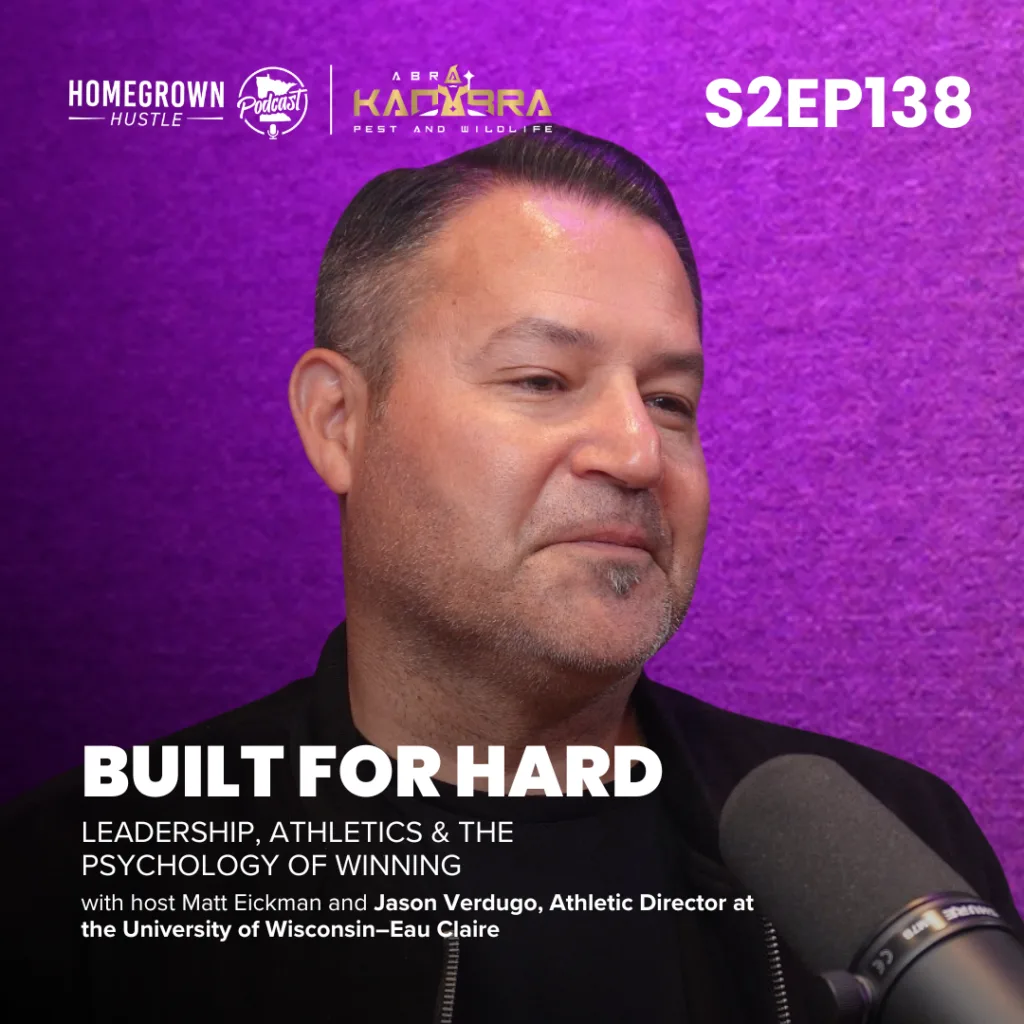
What separates high performers from everyone else? According to Jason Verdugo, Athletic Director at the University of Wisconsin–Eau Claire, it starts with learning how to handle hard things.
In this episode of Homegrown Hustle, host Matt Eickman sits down with his former baseball coach and mentor, Jason Verdugo, to explore the intersection of athletics, leadership, organizational culture, and personal development. Drawing from his experiences as a Division I multi-sport athlete at Arizona State, professional baseball player, collegiate coach, NCAA executive leader, and Athletic Director, Verdugo shares profound insights on resilience, transformational leadership, athlete development, and the future of collegiate athletics.
The conversation examines how elite performers are developed through intentional exposure to discomfort, why consistency is often more important than motivation, and how leaders can inspire individuals to exceed their perceived limitations. Jason also discusses the evolution of coaching philosophy, the challenges facing modern student-athletes, the impact of NIL (Name, Image, and Likeness), and what business leaders can learn from championship athletic programs.
This episode is a masterclass in leadership psychology, culture-building, and helping people become capable of achieving more than they thought possible.
Key Takeaways:
- Success is built through consistent exposure to productive discomfort.
- Great coaches prepare athletes for life, not just competition.
- Leadership is the ability to help people perform beyond their perceived limitations.
- High-performance cultures require transparency, accountability, and commitment.
- Consistency becomes difficult because success often requires embracing monotony.
- Modern leadership is shifting from transactional management to transformational influence.
- Student-athletes develop resilience because they repeatedly experience and overcome adversity.
- Strong organizational cultures are created through shared expectations and standards.
- Leadership development must be intentional rather than assumed.
- Today’s athletes often require more individualized coaching approaches than previous generations.
- Imposter syndrome exists at every level of achievement, including executive leadership.
- Exposure to high-level decision-making environments accelerates leadership growth.
Chapters:
00:00 – Introduction & Mentor Reunion
01:13 – Jason’s Athletic Journey
03:27 – Achieving the Dream Too Early
04:37 – Professional Baseball & Athletic Development
05:34 – Building a High-Performance Culture
06:20 – Preparing Athletes for Life Through Adversity
10:53 – The Power of Storytelling in Leadership
13:21 – From Coach to Athletic Director
15:40 – The Formula for Winning
16:41 – The Leadership Gap in Modern Athletes
19:17 – Developing Freshmen into Leaders
21:23 – The Evolution of Coaching Philosophy
25:33 – Why Athletes Become High Performers
28:48 – Coaching Youth Sports Today
30:45 – Managing and Leading Gen Z
33:24 – Career Defining Leadership Moments
37:18 – NIL and the Business of College Athletics
44:20 – Managing Athletic Department Culture
46:56 – The Hidden Sacrifices of Leadership
56:00 – Legacy, Mentorship & Long-Term Impact
01:01:13 – Final Thoughts
GUEST RESOURCES:
Linkedin: https://www.linkedin.com/in/jason-verdugo-62796512/