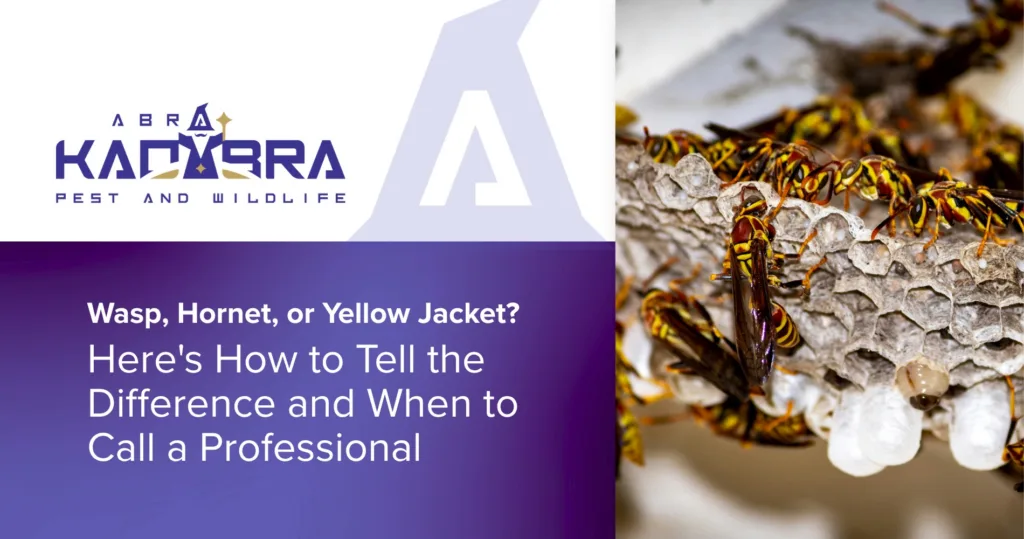
Few things can ruin a summer afternoon faster than discovering a wasp nest near your front door or hearing the unmistakable buzz of yellow jackets while mowing the lawn.
Many people use the terms wasp, hornet, and yellow jacket interchangeably, but they’re actually different insects with different nesting habits and behaviors. Knowing which one you’re dealing with can help you understand the risk and determine the safest way to handle the problem.
No matter the species, one thing remains the same: if stinging insects have built a nest on your property, it’s best to address it before the colony continues to grow.
What’s the Difference Between Wasps, Hornets, and Yellow Jackets?
While all three are stinging insects, there are a few key differences.
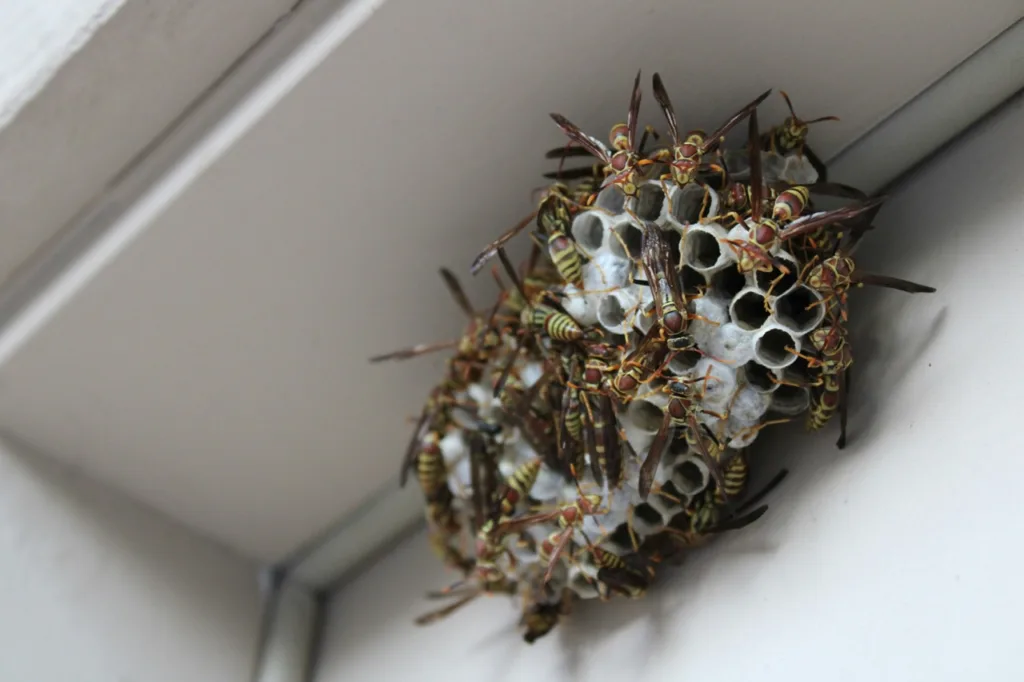
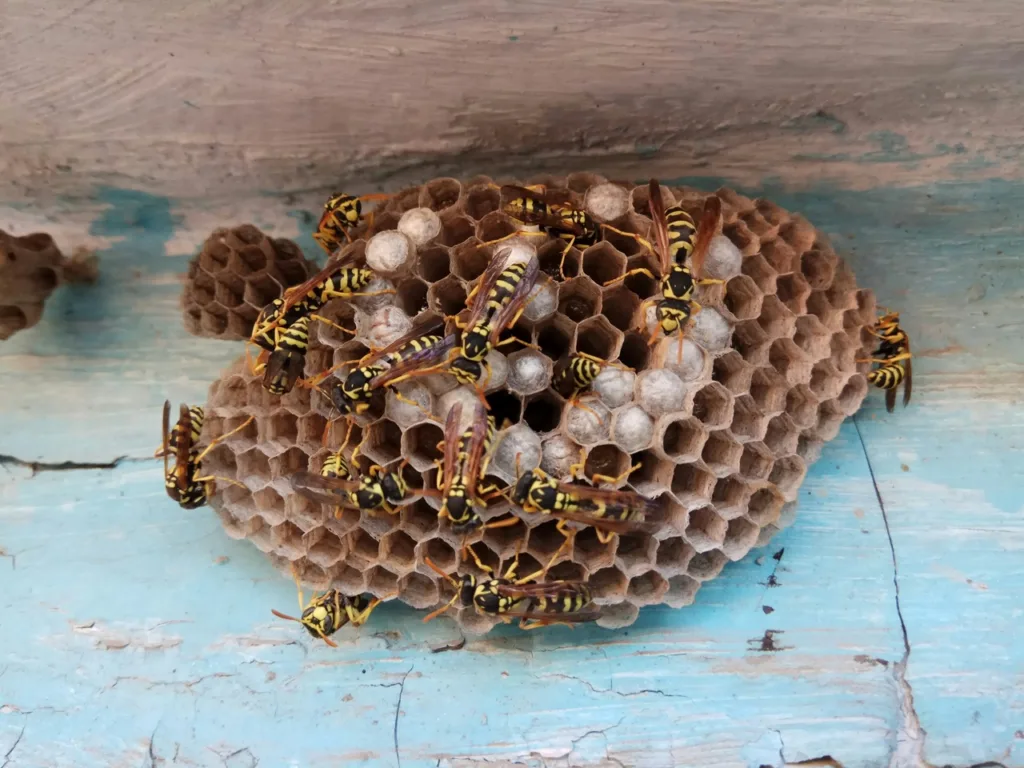
Paper wasps are slender with long legs that hang below their bodies when they fly. They build the familiar umbrella-shaped paper nests that often hang beneath eaves, decks, railings, and porch ceilings. Paper wasps are generally less aggressive than yellow jackets but will defend their nest if disturbed.
Yellow jackets are smaller and brighter yellow than most paper wasps. They often build nests underground, inside retaining walls, or in wall voids. Because they’re highly protective of their colonies, yellow jackets are responsible for many of the painful stings people experience during late summer.
Hornets, including the bald-faced hornet commonly found in Minnesota, build large enclosed paper nests in trees, shrubs, or attached to buildings. Although they’re technically a type of wasp, they’re larger than paper wasps and can become aggressive when someone gets too close to the nest.
Where Do Wasps Build Nests?
Stinging insects look for quiet, protected places where they can build and expand their colonies.
Some of the most common nesting locations include:
- Under roof eaves
- Porch ceilings
- Decks and railings
- Playsets
- Trees and shrubs
- Sheds and garages
- Attics and wall voids
- Underground burrows and landscaping
Some nests are easy to spot, while others remain hidden until someone accidentally gets too close.
Why Are Wasps More Aggressive in Late Summer?
Many homeowners notice wasps seem more active in August and September.
That’s because colonies are at their largest by late summer. A nest that began with a single queen in the spring may now contain hundreds of workers protecting it.
Food sources also begin to change. As natural sources become less available, yellow jackets in particular become attracted to sugary drinks, garbage cans, outdoor meals, and pet food. This is why they’re such common guests at backyard barbecues and fall gatherings.
Should You Remove a Wasp Nest Yourself?
It depends on where the nest is located, but in many cases, professional removal is the safest option.
Small, newly established nests that are far away from people may not require immediate action. However, nests located near entrances, patios, sidewalks, children’s play areas, or frequently used outdoor spaces can quickly become a safety concern.
Attempting to remove a nest yourself carries several risks. Disturbing the colony can trigger a defensive response, leading to multiple stings in a matter of seconds. This is especially dangerous for anyone with a known allergy to stinging insects.
Nests hidden inside walls, underground, or high above the ground can also be difficult to treat effectively without the proper equipment.
How Professional Wasp Removal Works
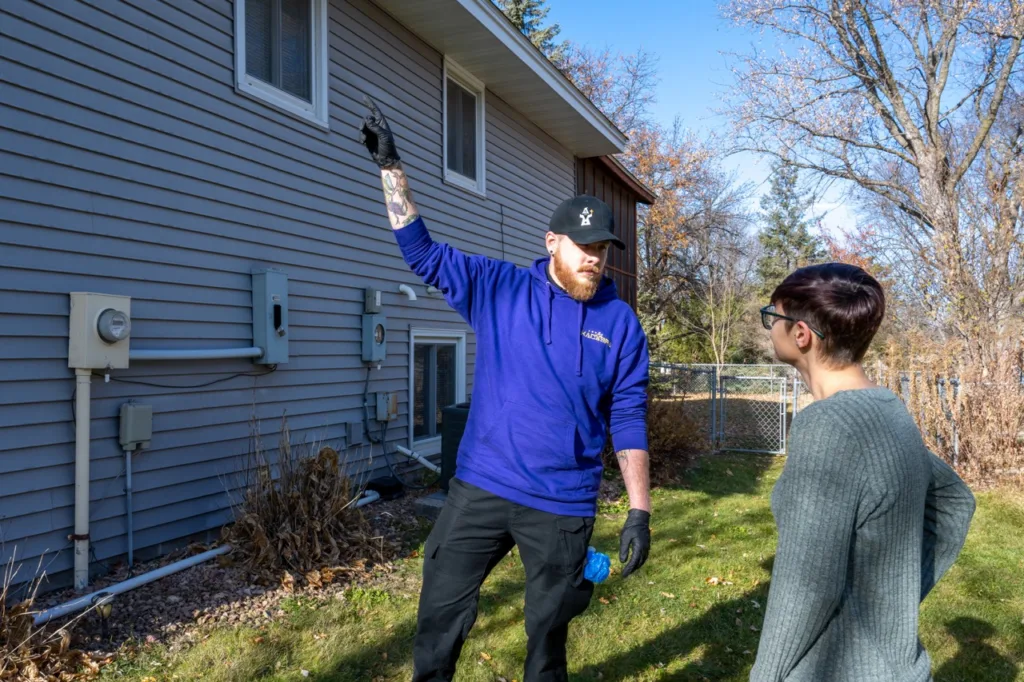
Professional treatment starts with identifying the species and locating the nest.
At Abra Kadabra Environmental Services, we inspect the area to determine where insects are entering and leaving, evaluate the size and location of the colony, and recommend the safest treatment approach.
Because every nest is different, treatment methods vary depending on the insect species, nest location, and level of activity. Our goal is to eliminate the active colony while helping reduce the chances of future problems around your home.
We’ll also identify conditions that may be attracting stinging insects and recommend practical steps to make your property less inviting.
How to Help Prevent Wasps Around Your Home
You can’t eliminate every wasp from your yard, but a few simple maintenance steps can make your property less attractive.
Regularly inspect your home during the spring and early summer for small nests under eaves, around light fixtures, and beneath decks. Empty garbage cans regularly, keep lids tightly closed, and clean up food and drink spills after spending time outdoors.
If you notice increasing wasp activity in one area, avoid disturbing it until you can determine where they’re nesting.
Finding a small nest early is much easier than dealing with a mature colony later in the season.
Frequently Asked Questions
Are yellow jackets more aggressive than paper wasps?
Generally, yes. Yellow jackets are highly protective of their nests and are more likely to sting if they feel threatened.
Will a wasp nest go away on its own?
Most annual wasp colonies die off after the first hard frost. However, the nest may remain, and dealing with active colonies before they reach full size is usually the safer option.
Can I spray a wasp nest myself?
Store-bought sprays may work for some exposed nests, but they can also provoke defensive behavior if the colony isn’t completely eliminated. Nests inside walls, underground, or in hard-to-reach locations should be handled by a professional.
When should I call a pest control company?
If the nest is close to your home, located in a high-traffic area, difficult to reach, or if anyone in your household has a sting allergy, it’s best to contact a professional.
Don’t Let a Small Nest Become a Bigger Problem
Wasps, yellow jackets, and hornets play an important role in nature, but they don’t belong near your front door, patio, or children’s play area.
If you’ve noticed increased wasp activity or discovered a nest on your property, addressing it early is the safest and most effective approach.
Abra Kadabra Environmental Services provides professional wasp, hornet, and yellow jacket removal throughout Minnesota. Contact us today to schedule an inspection and enjoy your outdoor spaces with confidence.