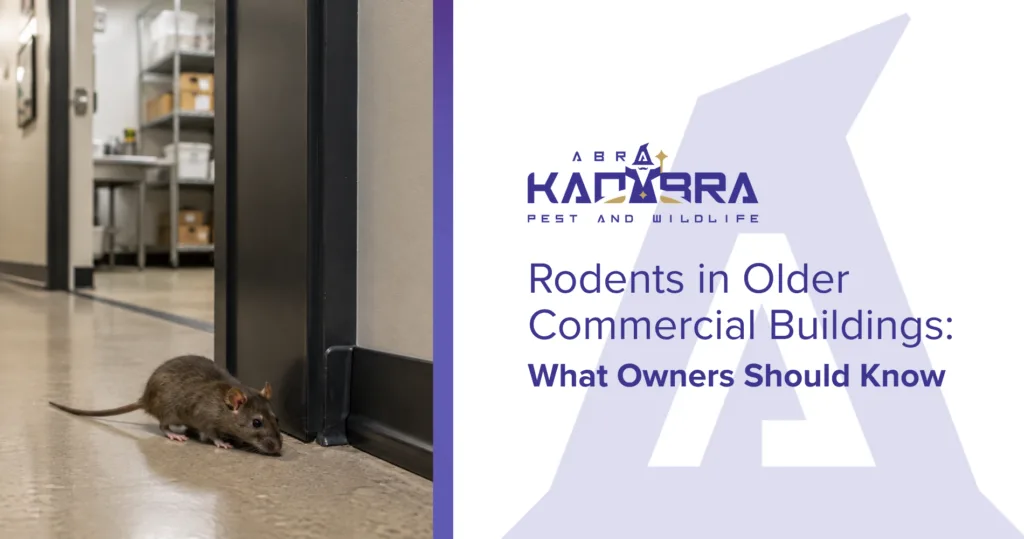
Older commercial buildings are an important part of communities throughout Minneapolis, St. Paul, and the Twin Cities. Many have been carefully maintained for decades and continue to serve businesses, tenants, employees, and customers every day. They can also come with some unique challenges when it comes to keeping mice and rats out.
Rodent activity in an older building does not mean the property has been poorly maintained. Buildings naturally change over time. Materials settle, utilities are updated, renovations are completed, and heating, plumbing, electrical, and communication systems evolve. Even a well-maintained commercial property can develop small openings that are difficult to spot but large enough for a mouse to find.
For owners of older commercial properties, rodent prevention is less about finding something “wrong” with the building and more about understanding how the property has changed over time and where rodents may be finding opportunities to get inside.

Why Rodent Prevention Can Be Different in Older Buildings
One of the things that makes an older commercial building unique is everything that has happened to it over the years. A property may have gone through additions, plumbing upgrades, electrical work, HVAC changes, new communication lines, or other improvements.
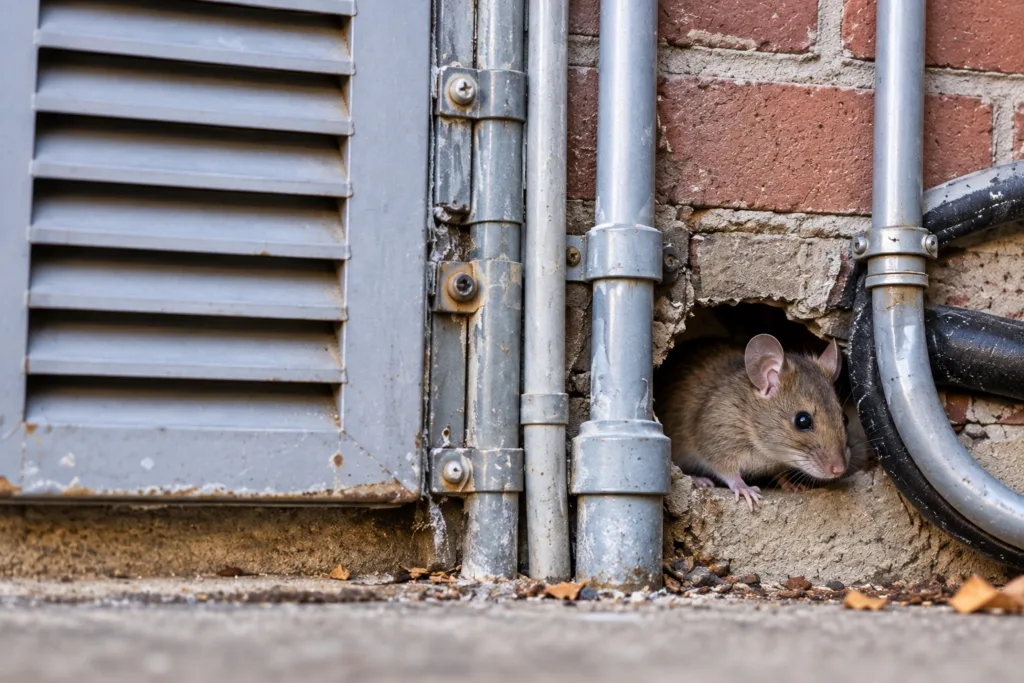
Those updates keep a building functional, but they can also change its exterior envelope. A utility line may pass through an exterior wall. An older loading door may not seal quite the way it once did. Small gaps may develop where different building materials meet.
The challenge is that rodents are very good at finding these opportunities. Mice can enter through surprisingly small openings, so an entry point may not look significant during a normal maintenance inspection.
Areas around utility penetrations, exterior doors, foundations, vents, HVAC components, rooflines, loading docks, and previous additions are all worth a closer look.
Why Mice Can Be Difficult to Track Down
Seeing a mouse in a commercial building does not always tell you where the problem started.
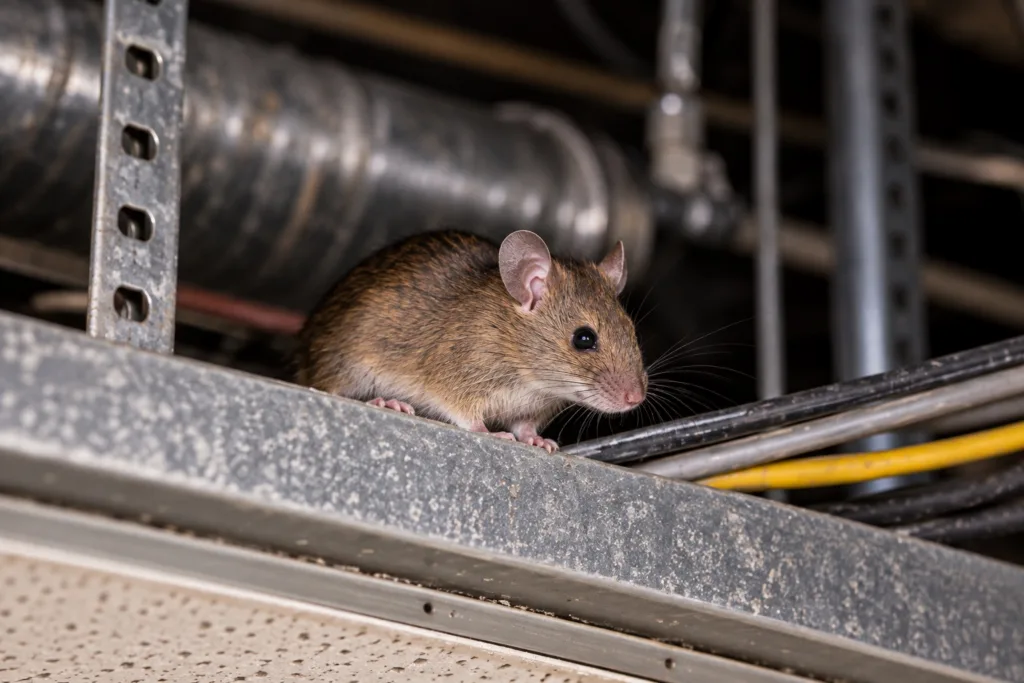
Older buildings can have wall voids, suspended ceilings, basements, mechanical areas, crawl spaces, and utility chases that give rodents hidden ways to move through the property. A mouse spotted in an office or tenant space may have entered the building somewhere completely different.
This is one reason recurring rodent activity can be so frustrating. You may remove the mouse you saw, everything becomes quiet, and then another one appears weeks later.
In that situation, the issue may not be the rodents that were removed. There may still be an entry point allowing new mice or rats into the building.
Professional commercial rodent control looks beyond where a rodent was spotted. The bigger question is how it got inside in the first place.
What Commercial Property Owners Should Watch For
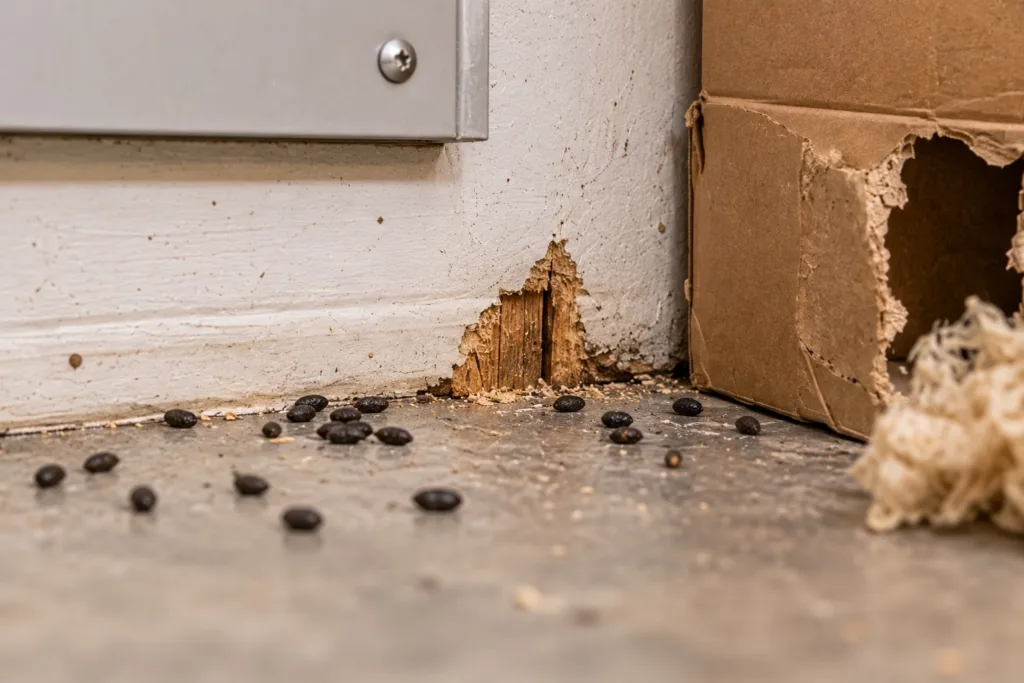
Rodent activity is not always obvious. Droppings are one of the most recognizable signs, but property owners and facility teams may also notice gnaw marks, scratching sounds inside walls or ceilings, damaged packaging, shredded nesting materials, unusual odors, or reports of sightings from tenants and employees.
It can be helpful to keep track of where activity occurs. If sightings or droppings repeatedly appear around the same tenant space, loading area, mechanical room, or section of the building, that pattern may provide clues about a hidden travel route or nearby entry point.
It is also worth paying attention to changes around the exterior. Door sweeps and seals can wear with regular use, especially around loading docks and service entrances. Utility work can leave small openings around plumbing, electrical, HVAC, and communication lines. These changes can be easy to overlook when you see the same property every day.
Why Rodent Exclusion Matters
Removing mice or rats from a commercial building is important, but it is only one part of long-term rodent control.
If rodents still have a way into the structure, new activity can occur after the original problem appears to be resolved. That is where rodent exclusion becomes important.
Rodent exclusion focuses on identifying potential entry points and determining how those areas can be secured. In an older commercial property, this can require a detailed look at the building because there may be more than one potential pathway.
Prevention also includes making the property less attractive to rodents. Properly storing food, keeping break rooms and food-service areas clean, managing dumpsters and recycling areas, addressing moisture problems, and keeping vegetation and stored materials away from the building can all help.
The strongest approach brings these pieces together instead of relying on traps or treatments alone.
Minnesota Weather Adds Another Challenge
Commercial buildings in Minnesota experience significant seasonal changes. Snow, ice, moisture, freeze-thaw cycles, summer heat, and stretches of very cold weather all affect buildings over time. They also influence rodent behavior.
As outdoor temperatures fall, mice and rats become more motivated to find protected spaces. A small opening that received little attention during summer can suddenly become more important when rodents are actively looking for shelter.
That makes late summer and fall an especially good time for commercial property owners to check exterior doors, utility penetrations, foundations, and other potential access points.
However, commercial rodent prevention is still a year-round effort. Once rodents find dependable shelter and access to food or water, activity can continue regardless of the season.

Protecting Your Commercial Property From Rodents
For many owners, an older commercial building represents years of care and a significant investment. Rodent prevention is another way to protect that investment.
At Abra Kadabra Environmental Services, we use Integrated Pest Management, or IPM, as part of our approach to commercial pest control. Instead of focusing only on the pest that was seen, IPM looks at the larger picture. That can include inspection, monitoring, exclusion, sanitation recommendations, and targeted pest-control strategies based on the property.
This approach can be especially helpful for older commercial buildings because every property has its own history and layout. Understanding the building is an important part of understanding the rodent problem.
If you are noticing recurring mice or rats, droppings, scratching noises, or other signs of rodent activity, a professional inspection can help determine where the problem may be coming from. It can also be useful if you simply want a trained set of eyes on the property before a small issue becomes a larger one.
Abra Kadabra Environmental Services provides commercial pest control and rodent control for businesses and property owners throughout Minneapolis, St. Paul, and the Twin Cities metro