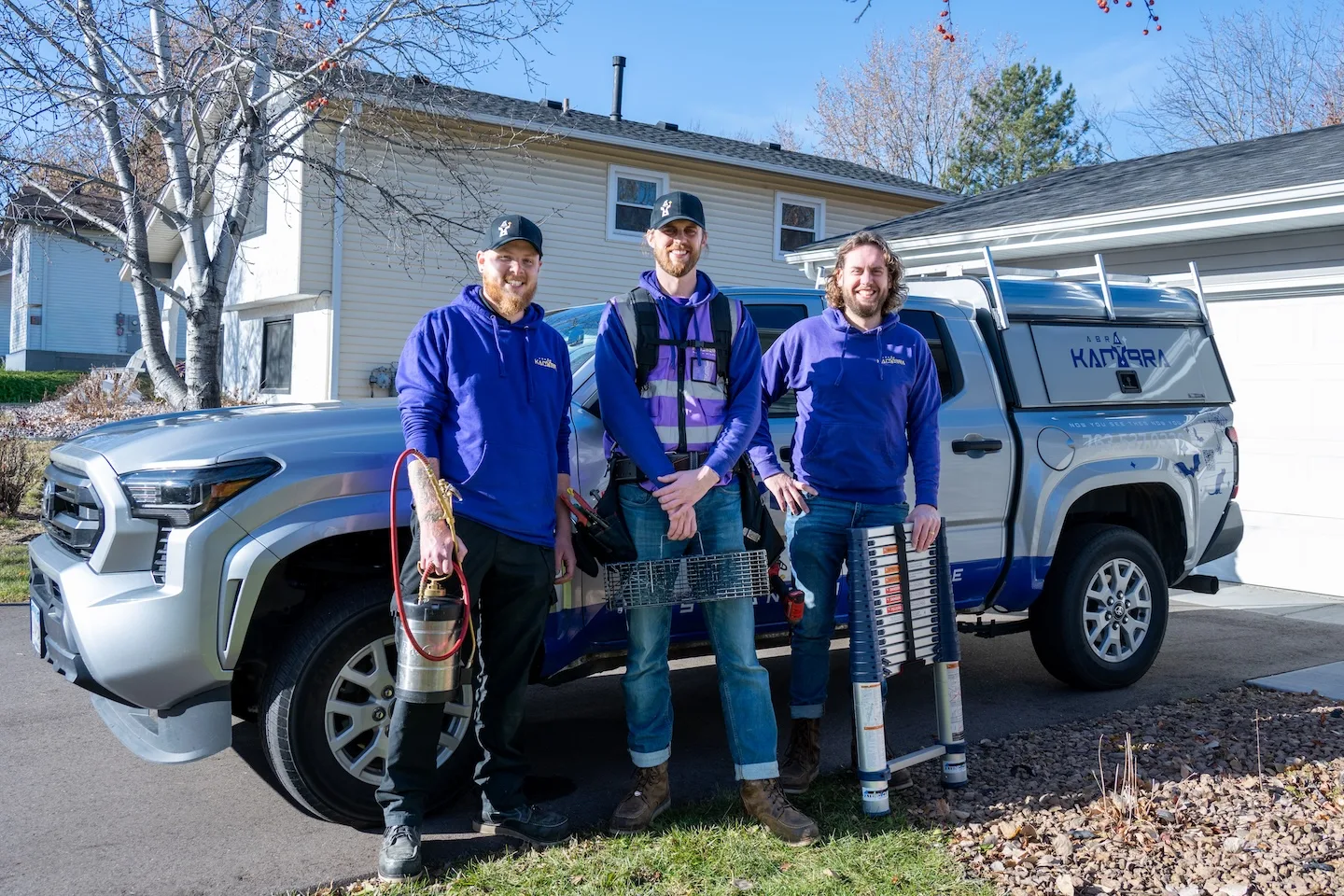
Signs You Have Squirrels in Your Attic, Ceiling, or Home
- Listen for scratching or scurrying sounds in your attic, ceiling, or walls, particularly in early morning or late afternoon when grey squirrels are most active.
- Look for chewed wires, insulation, or wood. Squirrels gnaw constantly to file down their teeth, and electrical wiring is a frequent target.
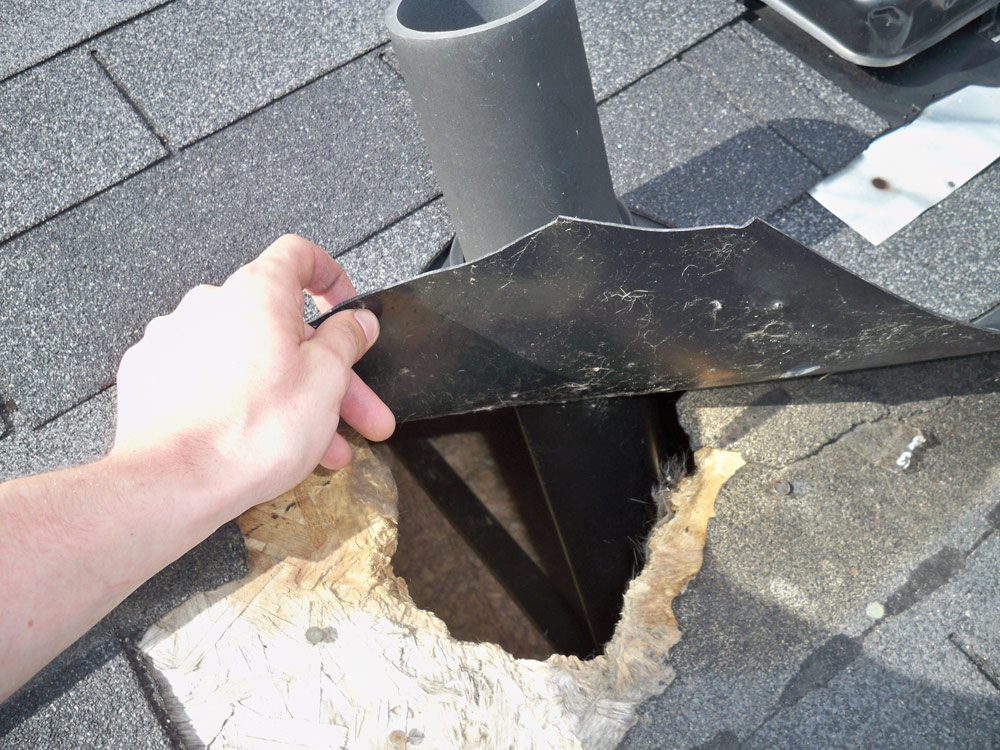
- Check for entry holes near rooflines, soffits, fascia boards, and vents. Gaps can range from quarter-sized (flying squirrels) to tennis-ball-sized (grey squirrels).
- Small, oval-shaped droppings near entry points or inside attic insulation are a reliable indicator of an active infestation.
- Torn or urine-soaked insulation means squirrels are actively nesting in your attic.
- Squirrels running your roofline or circling vents are scouting entry points, not just passing through.
- Bird feeders emptied overnight or garden bulbs dug up suggest squirrels are establishing territory close to your home.
Why Squirrels in Your Attic Are a Serious Problem
Squirrels don’t just make noise. A squirrel infestation puts your home at real risk:
Fire hazard from chewed wires. Squirrels gnaw on electrical wiring in attics and walls. Exposed or frayed wires are a serious fire hazard. If squirrels have been in your attic for more than a few weeks, we strongly recommend a wiring inspection.
Structural damage. Squirrels chew through wood framing, fascia, soffits, and roof decking to create and enlarge entry holes. Repairing squirrel damage can run into thousands of dollars if left untreated.
Insulation destruction. Squirrels shred and nest in attic insulation, reducing your home’s energy efficiency and leaving contaminated material behind.
Water damage. Chewed vents and roofline gaps let moisture in. A single Minnesota winter can turn a minor squirrel entry point into a serious water intrusion problem.
Health risks. Squirrel droppings and urine can carry salmonella and leptospirosis. Nesting material can also introduce fleas, ticks, and mites into your living spaces.
The sooner you address a squirrel infestation, the less damage there is to repair.
How We Get Rid of Squirrels — Our Removal Process
Effective squirrel removal isn’t just trapping and releasing. Without sealing entry points, new squirrels will find the same gaps within days. Here’s how Abra Kadabra handles squirrel control from inspection to prevention:
Step 1 — Thorough Home Inspection
Our wildlife technicians inspect your home’s exterior and interior to identify every active entry point, assess the damage, and confirm which squirrel species is responsible. Entry hole size matters: red squirrels fit through golf ball-sized gaps, while grey squirrels need a hole the size of a tennis ball.
Step 2 — Humane Squirrel Removal
We place humane live-capture traps at active entry points and along travel routes. We monitor traps regularly and relocate captured squirrels per Minnesota DNR guidelines. We never use poisons or methods that leave animals to die inside your walls.
Step 3 — Entry Point Exclusion & Sealing
Once squirrels are removed, we seal every identified entry point using heavy-gauge hardware cloth, flashing, and other materials squirrels cannot chew through. This step is what separates a permanent solution from a temporary one.
Step 4 — Cleanup & Damage Assessment
We sanitize contaminated insulation, remove nesting material, and document damage for insurance purposes. We’ll also flag any wiring or structural concerns that need a follow-up contractor visit.
Step 5 — Prevention & Follow-Up
We build a prevention plan for your property: trimming tree branches that overhang the roof, recommending vent guards, and scheduling follow-up visits as part of your service package.

Squirrel Behavior by Species
Grey Squirrels
Red Squirrels
Flying Squirrels
Our Squirrel Control Service Packages
Whatever your situation, we have a plan that fits your home and budget.

Gold Plan
Gold Plan

Silver Plan
Silver Plan

Platinum Plan
Platinum Plan
Why Homeowners Choose Abra Kadabra for Squirrel Removal
- Our wildlife specialists are licensed and trained specifically in humane wildlife removal, not general pest technicians filling in on wildlife calls.
- We use live-capture traps and relocate every squirrel we remove. No poisons, no shortcuts.
- Our IPM-based approach uses the least impactful methods available to solve the problem permanently.
- Every service we perform is fully warrantied. We stand behind every inspection, removal, and exclusion.
- We’re rated 4.8–4.9 stars by hundreds of Twin Cities homeowners and hold a BBB A+ rating. We’re also members of the NPMA and MPMA (Minnesota Pest Management Association).
- We know Minnesota: the seasonal squirrel patterns, the lake property vulnerabilities, the cold-climate entry points that general pest companies miss.
Frequently Asked Questions About Squirrel Control
How do I get rid of squirrels in my attic?
Are squirrels dangerous?
How do squirrels get into my house?
Will squirrels leave my attic on their own?
Is squirrel removal humane?
How much does squirrel removal cost in Minnesota?
When are squirrels most active in Minnesota?
Service Areas
Northeast Metro
- Andover
- Anoka
- Arlington
- Blaine
- Champlin
- Circle Pines
- Columbia Heights
- Coon Rapids
- Fridley
- New Brighton
North Metro
- Brooklyn Center
- Brooklyn Park
- Maple Grove
Central Metro
- Crystal Bay
- Deephaven
- Excelsior
- Golden Valley
- Greenwood
- Hopkins
- Independence
- Long Lake
- Maple Plain
- Medina
- Minnetonka
- Minnetonka Beach
- Minnetrista
- Mound
- Navarre
- New Hope
- Orono
- Plymouth
- Shorewood
- Spring Park
- St. Louis Park
- Tonka Bay
- Wayzata
- Woodland
South Metro
- Belle Plaine
- Biscay
- Browntown
- Chanhassen
- Chaska
- Cokato
- Dassel
- Eden Prairie
- Edina
- Glencoe
- Green Isle
- Hamburg
- Hutchinson
- Lester Prairie
- Montrose
- New Germany
- Plato
- Shakope
- Silver Lake
- St. Bonifacius
- Stewart
- Victoria
- Waconia
- Watertown
- Winsted
- Young America
Southeast Metro
- Woodbury
Educational Resource
Learn more about our wildlife & pest control services


Get Rid of Squirrels for Good — Schedule Your Inspection Today